
XAU/USD
What it is
XAU/USD is the price of one troy ounce of gold in US dollars
Follow indicative gold prices, see what moves them, and learn how gold CFDs work before you trade.
XAU/USD
What it is
XAU/USD is the price of one troy ounce of gold in US dollars
Trading hours
23ha day, Monday to Friday
Monday to Friday, 23 hours a day · Sunday 18:00 to Friday 17:00 US Eastern time, with a daily break from 17:00 to 18:00
Contract size
100ozin 1 lot
1 lot = 100 troy ounces · Minimum trade 0.01 lot (1 ounce)
What moves it most
Interest rates, the US dollar and fear
Gold Spot / U.S. Dollar XAU/USD
—USD
Live gold prices are on the way
This chart will show prices from the Navion Pro platform as soon as they are connected.
| Date | High | Low | Close | Change |
|---|
Daily highs, lows and closes will appear here once live prices are connected.
XAU/USD prices from the Navion Pro platform, daily sessions in New York time. Prices may differ from live dealing prices.
Gold earns no interest and no profit, so its price depends entirely on how much people want to hold it. The World Gold Council groups the forces behind that demand into four (Kitco).
A stronger economy lifts spending on jewellery and technology.
Wars, crises and market crashes send buyers looking for safety.
Higher rates make gold less attractive, because holding it means giving up interest elsewhere.
Rising prices draw in buyers who follow trends, and falling prices push them out.
The dollar matters too. Gold is priced in dollars, so when the dollar weakens, the same ounce becomes cheaper for buyers using other currencies.
Enter an amount and an interest rate to see the income you would give up by holding gold instead of cash that pays interest.
Gold often moves sharply around a handful of scheduled events. All of them are on our Economic Calendar.
Example only. The price and leverage are for illustration. Margin depends on your account type, the leverage you choose and the gold price at the time.
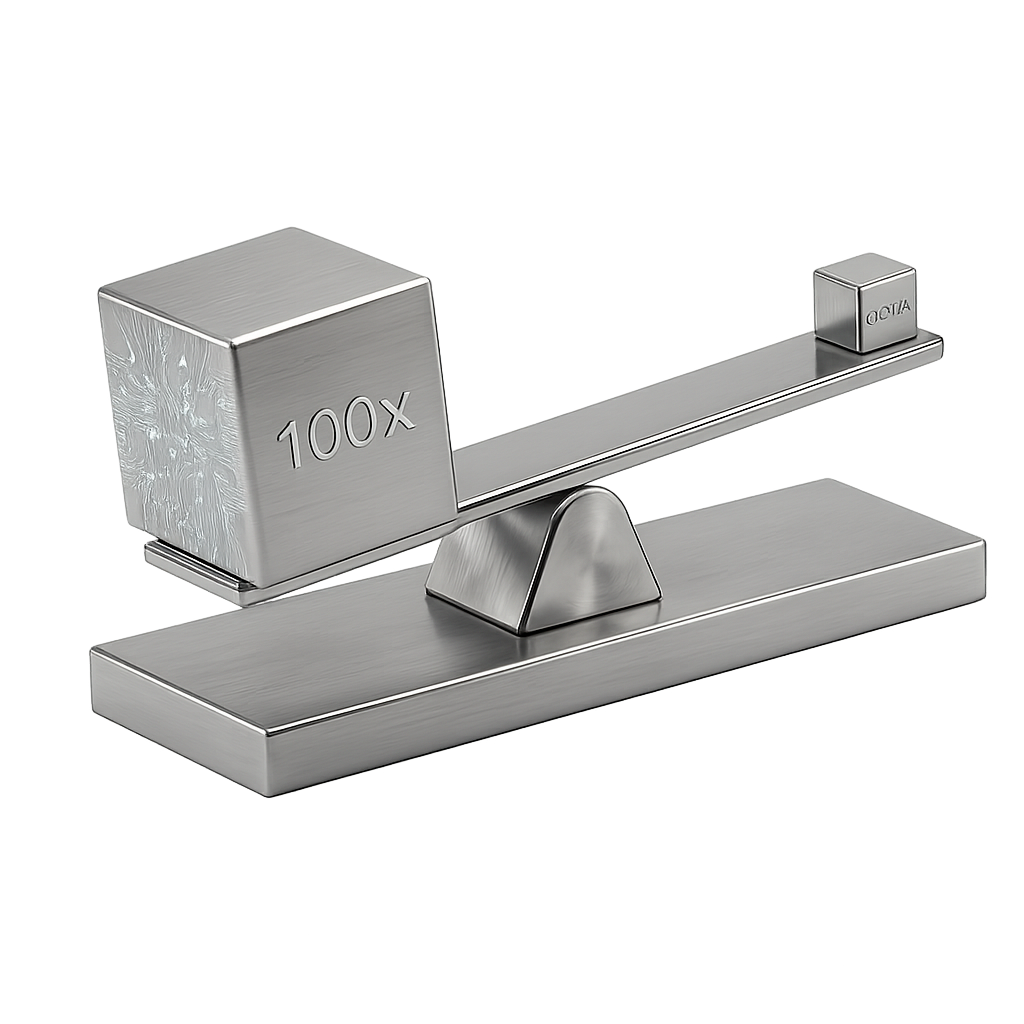
The trade. A trader buys the minimum 0.01 lot, which is 1 ounce of gold, at an example price of $3,900. The position is worth $3,900. The margin. At 100 times leverage, the trader puts up 1/100th of that: $39.
▲ If gold rises 1%
$3,939
+$39 on the position
Equal to the whole margin
If gold rises 1%, to $3,939, the position gains $39, equal to the whole margin.
▼ If gold falls 1%
$3,861
−$39 on the position
Wipes out the whole margin
If gold falls 1%, to $3,861, the position loses $39, which wipes out the whole margin.
Before it gets that far. If losses eat into your margin, you may get a margin call, a warning that your account needs more funds to keep positions open. If your equity keeps falling, positions can be closed automatically. This is called a stop out. Margin call and stop out levels depend on your account, so check them on the platform.
The costs. The spread is paid when the trade opens. If the position is still open at the daily cut off, an overnight financing charge, also called a swap, applies for each night it is held. Swap rates change with market conditions, so check the current rate on the platform before you trade.
Trading gold CFDs carries a high level of risk, and you can lose some or all of your money. They may not be suitable for everyone.
Only trade with money you can afford to lose.
Gold prices can move quickly and by large amounts.
The price can jump from one level to another with no trading in between, for example after major news, so orders may fill at worse prices than expected.
Leverage magnifies losses as well as gains. If your account falls below the required margin, positions may be closed and you may be asked to add funds.
Holding a position past the end of the trading day can add financing charges that build up over time.
The gap between the buy and sell prices is a cost on every trade, and it can widen.
Myth
Fact
Not always. In the week to 23 October 2026, Middle East attacks pushed oil to a six month high, yet gold fell 4%, its steepest weekly drop since June (Reuters via MarketScreener). Higher oil raised fears of higher interest rates, and that outweighed the fear.
Myth
Fact
It often does, because gold is priced in dollars, so a weaker dollar makes it cheaper for buyers using other currencies. But the link can weaken or reverse: in periods of stress, gold and the dollar can rise together as investors buy both for safety.
Myth
Fact
Gold can move sharply. Its price can swing by more than 2% in a day around interest rate decisions and US data, and it has fallen by more than 40% from a peak before, between 2011 and 2015.
Myth
Fact
A CFD follows the price of gold. You never own the metal or take delivery of it, and you pay overnight financing for as long as the position stays open. Unlike owning gold, you can also trade a fall in price.
Myth
Fact
If inflation pushes interest rates up, gold can fall. Gold pays no interest, so higher rates raise the income you give up by holding it. In 2022, US inflation hit a 40 year high, yet gold ended the year almost unchanged as the Fed raised rates quickly.
No. A gold CFD lets you trade on the price of gold without owning the metal. You can trade on the price rising or falling.
The price of one troy ounce of gold, in US dollars.
Gold trades 23 hours a day, Monday to Friday. The market opens at 18:00 US Eastern time on Sunday and closes at 17:00 on Friday, with a one hour break each day from 17:00 to 18:00. These times follow US daylight saving, so they stay the same in New York all year.
Gold pays no interest. When rates rise, holding gold means giving up more income elsewhere, so demand tends to fall.
Gold is priced in dollars, so a weaker dollar makes it cheaper for buyers using other currencies.
Often, but not always. A crisis that pushes interest rates higher can send gold down.
The spread, which is the gap between the buy and sell price; overnight financing (swap) if you hold a position past the daily cut off; and possible slippage when prices move fast. Spreads and swap rates change with market conditions, so check the current figures on the platform.
When you trade a CFD, you put up only part of the position's value as margin, and the rest is effectively funded for you. If you keep the position open past the daily cut off, a financing charge, called a swap, is applied for each night it stays open. Buy and sell positions can have different swap rates, and the rates change with market conditions. You can see the current swap rate for gold on the platform before you place a trade.
Margin is the amount set aside to open a trade. For gold, it is the position's value divided by your leverage. For example, 1 lot (100 ounces) at an example price of $3,900 is worth $390,000. At 100 times leverage, the margin is $3,900. Margin changes with the gold price, the leverage you choose and your account type.
A margin call is a warning that your account equity has fallen close to the margin needed to keep your positions open. If it keeps falling and reaches the stop out level, positions can be closed automatically to limit further losses. The levels that trigger both depend on your account, and you can see them on the platform.
It depends on the gold price and the leverage you choose. The smallest trade is 0.01 lot, or 1 ounce. At an example price of $3,900 and 100 times leverage, that needs $39 of margin. As the gold price or your leverage changes, so does the amount.
Open a Navion Pro account to trade forex, metals, indices and more. Leveraged products carry a substantial level of risk.